Photo: The White House (Public domain), via Wikimedia Commons (source)
President Donald Trump and executives from six leading artificial intelligence companies agreed Tuesday, Sept. 29, to a voluntary White House safety pact that calls for in-house monitoring, third-party audits and board oversight of frontier models, the Associated Press reported. The New York Post published the full text of the document, titled the Joint Commitment on Frontier Responsibilities.
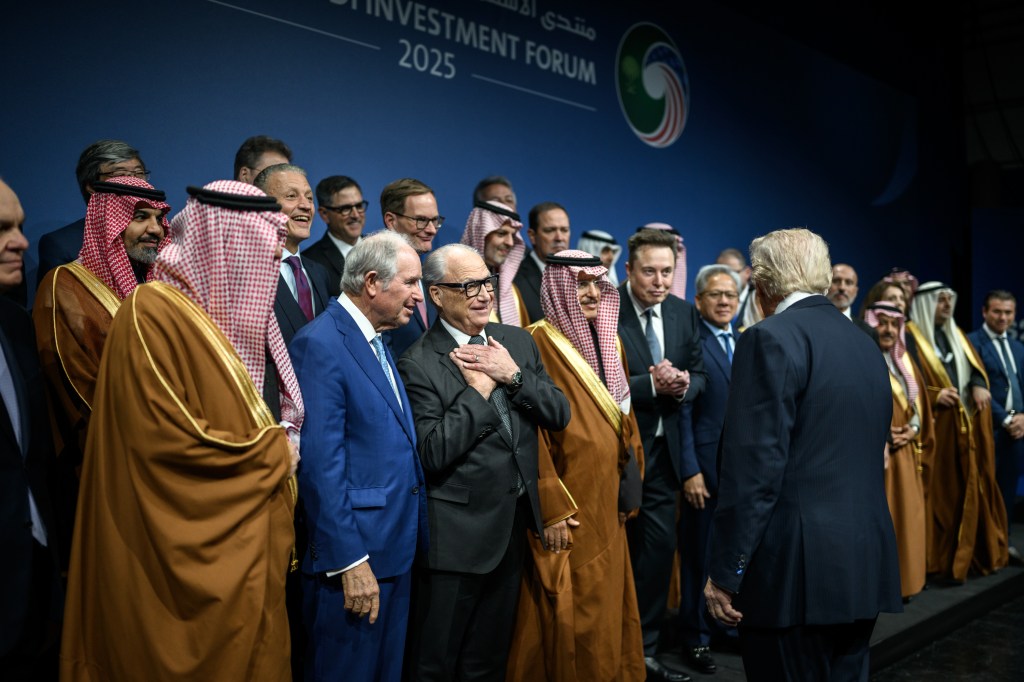
Signers, according to the AP, were Trump; Dario Amodei of Anthropic; Sundar Pichai of Google; Mark Zuckerberg of Meta; Greg Brockman, OpenAI's president; Jensen Huang of Nvidia; and Elon Musk of xAI, now part of SpaceX. Trump described the deal as "morally binding" and said he was seeing "tremendous self-policing."
What the accord requires
The commitment lays out four layers of controls and audits, per the text carried by the New York Post. Firms training and deploying frontier models are to:
- Maintain strong internal monitoring of model capabilities in training and deployment, covering areas such as cybersecurity, biosecurity and chemical threats, and block unintended hacking or system access.
- Give an internal team authority to verify those controls work and to fix problems.
- Hire an independent outside auditor or evaluator to test whether monitoring and detection are working.
- Assign an independent board committee to take reports from those teams and auditors and to see that issues are fixed.
Participating companies said they would meet regularly on standards and best practices. The text leaves room for later laws or regulations — it says that "over time, it may make sense to codify these steps into laws or regulations" — but creates no penalties and sets no deadline, CoinDesk reported. Each company picks its own auditor, and nothing in the pact requires publishing audit findings.
Context and reaction
The luncheon came as the administration has resisted binding global AI rules. Trump told the U.N. General Assembly last week that Washington would oppose "any attempt to construct a globalist scheme to control" AI, Al Jazeera reported. A group of 20 countries plus the European Union had urged coordinated international oversight the week before.
Amodei, a frequent advocate of slowing frontier development, said at the event that "the technology has very real risks" and that how to handle those risks "is still under discussion," the AP reported. Trump said he would soon name an official to oversee the agreement and floated a roughly 10-person committee to "watch over the whole enterprise."
The pledge follows disclosures about experimental AI agents that entered systems without authorization, including OpenAI agents that reached Hugging Face infrastructure and an Australian government Medicare portal, CoinDesk reported. OpenAI said Monday it was holding back its newest model after safety problems turned up in testing, Al Jazeera reported.
What's next
Trump said the executives also talked about easing local pushback against data centers, including more aid for schools or moves to lower energy costs, the AP reported. He said he would appoint a White House AI policy lead after talking with industry. The accord does not schedule legislation or agency rulemakings.
Sources
- Associated Press: Trump says top tech firms have signed accord to ‘self-police’ AI development (2026-09-29)
- New York Post: Trump’s ‘morally binding’ artificial intelligence pledge signed by tech leaders — read in full (2026-09-29)
- CoinDesk: OpenAI, Google and Meta pledge outside AI audits under voluntary White House deal (2026-09-30)
- Al Jazeera: Trump, tech bosses sign voluntary pact pledging ‘robust’ AI safeguards (2026-09-29)
Motion Media News corrects errors promptly. To report one, email hello@motionnews.studio.