Photo: Office of the United States Trade Representative / @USTradeRep on X (Public domain), via Wikimedia Commons (source)
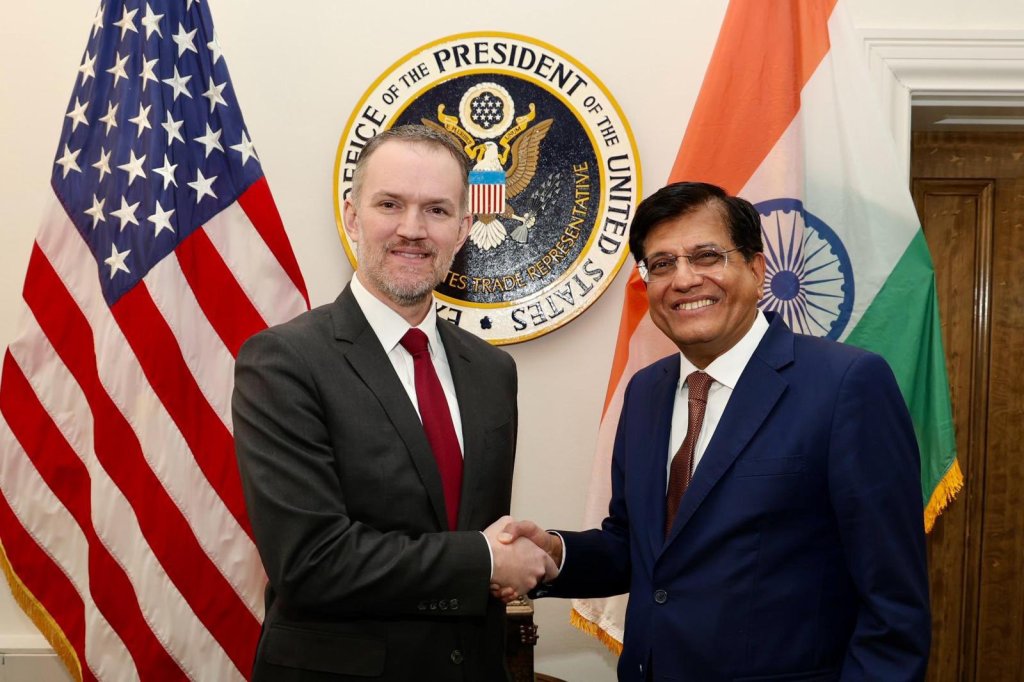
G20 trade ministers meeting in Milwaukee under the U.S. presidency agreed with one voice to denounce using food as a tool of economic or political pressure, U.S. Trade Representative Jamieson Greer said after chairing the Sept. 30–Oct. 1 ministerial.
The ministers’ food statement targets governments that slow, stop, block or redirect shipments of food, farm goods or farm inputs to force unrelated geopolitical concessions. Ministers said those tactics hurt livelihoods, warp competition and erode trust in markets. The text does not cover transparent measures that pursue legitimate domestic goals, including food security, Greer said in a companion release.
Forced labor and excess capacity
A separate forced-labor text did not win G20-wide agreement. The United States, Mexico and Argentina released their own document on the margins, Greer said. The three ministers pointed to International Labor Organization figures of 28 million people in forced labor worldwide as of 2021 and urged countries to bar imports or sales of merchandise made with that labor, in whole or in part.
The chair’s statement from the U.S. presidency says Greer was “severely disappointed” that not every G20 member backed import bans on forced-labor goods. On structural overcapacity, the chair’s text says a draft call for dedicated sectoral platforms and an end to non-market policies that drive surplus production drew support from nearly all members, but a small group rejected that cooperative path. Greer’s press remarks also cited sideline talks on diesel that he said helped prompt an expected increase in global diesel supply. The four workstreams for the U.S. presidency this year were food coercion, forced labor in supply chains, structural excess capacity and production, and MFN reform, according to the chair’s statement.
Ministers also debated most-favored-nation rules. The chair’s statement says Washington argued MFN has not delivered reciprocity and can block deals among market-oriented partners, while many governments still treat MFN as a pillar of the multilateral system and a growing share see room to revisit how it works in practice.
What's next
The United Kingdom takes the G20 presidency in 2027, the chair’s statement says. Greer said he hopes more economies will join action against forced labor in supply chains and that talks on overcapacity and MFN will continue. The food statement is a political consensus document, not a binding treaty obligation; any national follow-through would run through each member’s own laws and trade tools.
Sources
- Office of the U.S. Trade Representative: Chair’s Statement of the G20 Trade Ministerial (2026-10-02)
- Office of the U.S. Trade Representative: G20 Chair’s Statement (PDF) (2026-10-02)
- Office of the U.S. Trade Representative: G20 Trade Ministers’ Statement on the Weaponization of Food through Coercive Trade Actions (PDF) (2026-10-02)
- Office of the U.S. Trade Representative: Ambassador Greer Issues a Statement on G20 Trade Ministers Reaching Consensus on Condemning the Weaponization of Food through Coercive Trade Actions (2026-10-02)
- Office of the U.S. Trade Representative: Ambassador Greer Commends Trade Ministers Signing on to Statement Eliminating Forced Labor in Global Supply Chains (2026-10-02)
- Office of the U.S. Trade Representative: Statement on Eliminating Forced Labor in Global Supply Chains (PDF) (2026-10-02)
Motion Media News corrects errors promptly. To report one, email hello@motionnews.studio.