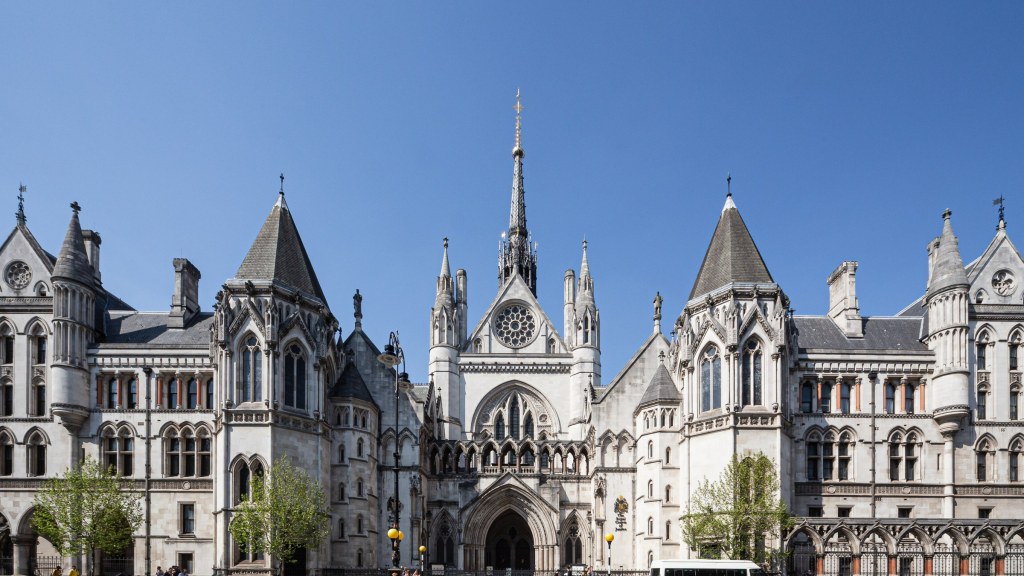
Photo: David Castor (CC0 1.0), via Wikimedia Commons (cropped) (source)
A High Court judge in London ruled on Monday, Oct. 12, that Chinese law will decide whether victims of a Chinese investment fraud own any part of more than 61,000 bitcoin seized by British police, according to the judgment published by The National Archives.
The coins are worth about $5 billion at a price near $83,200, Decrypt reported, citing CoinGecko. The Financial Times reported that the decision could improve the U.K. government's chances of keeping much of the haul, according to Decrypt and The Block, since victims were seen as better placed to win under English law.
What the judge decided
Mr. Justice Turner, sitting in the King's Bench Division, addressed a single preliminary question: whether English law, Chinese law or a mix of the two applies to the victims' claims. "The applicable law is Chinese law," he wrote, adding that he reached the same result under each legal framework he considered.
The victims filed under section 281 of the U.K.'s 2002 Proceeds of Crime Act, a provision that lets a person ask the court to declare that seized property belongs to them. Turner wrote that each applicant has to show a proprietary interest in the coins, and that the section does not set up a broader compensation scheme for crime victims.
The Director of Public Prosecutions, who brought the civil recovery case, argued that Chinese law applies on any analysis. Lawyers for the individual applicants argued for English law or a hybrid. Turner said questions about what Chinese law actually says, and how it applies, are "matters for a later stage."
The case
According to facts agreed for the hearing, Zhimin Qian ran about ten Ponzi schemes in China between 2014 and July 2017, and at least 128,409 investment contracts were signed. Victims' money was converted into bitcoin before she fled to Myanmar in July 2017. She reached London that September, and the Metropolitan Police seized devices used to access the coins in searches on Oct. 31 and Nov. 1, 2018.
The Block reported that Qian received a prison sentence of 11 years and eight months last November, following her guilty plea to money laundering charges. Citing Caixin, the outlet said roughly 16,000 Chinese victims are taking part in the U.K. case.
"The Court has held that whether victims retain rights in the frozen bitcoin is to be decided under Chinese law," said Jackson Ng, a partner at Duan & Duan UK, which represents some victims, according to The Block.
The U.K. holds an estimated 61,245 bitcoin, The Block reported, citing Arkham wallet labels, which ranks third among governments behind the United States, at an estimated 328,372, and China, at 190,000, per Bitcoin Treasuries data.
What's next
Fieldfisher, the lead firm for individual claimants, is pursuing an appeal of Turner's decision, the Financial Times reported, according to The Block and Decrypt. The Crown Prosecution Service said a further hearing will decide how the law applies and whether any victims can establish an interest in the bitcoin, Decrypt reported.
Sources
- High Court of Justice, King’s Bench Division (The National Archives): Director of Public Prosecutions v Zhimin Qian & Anor [2026] EWHC 2509 (KB) (2026-10-12)
- Decrypt: UK Moves Closer to Keeping $5B Bitcoin Haul After High Court Ruling (2026-10-13)
- The Block: UK High Court rules Chinese law governs claims over $5 billion in seized bitcoin (2026-10-13)
Motion Media News corrects errors promptly. To report one, email hello@motionnews.studio.