Photo: Sikander, CC BY-SA 4.0 (https://creativecommons.org/licenses/by-sa/4.0), via Wikimedia Commons (cropped) (source)
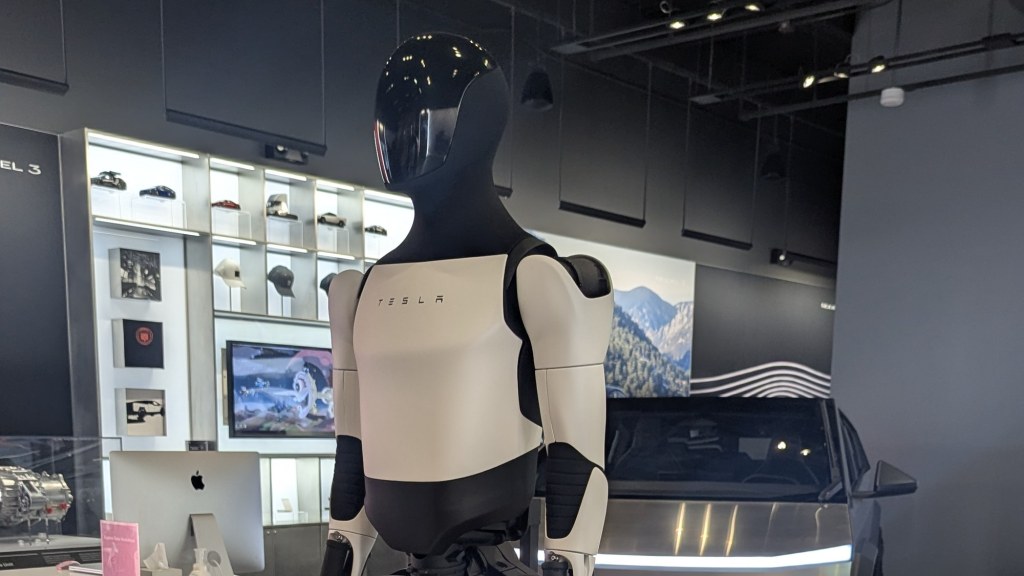
Tesla has raised production of its Optimus humanoid robot to several hundred units a week at its Fremont, California, factory, but is struggling with the robot's hands, its suppliers and its AI software, The Information reported on Friday, Sept. 25, according to outlets that summarized the paywalled report. Tesla has not publicly confirmed a weekly production figure.
That pace is about tenfold the few dozen robots a week Tesla made in second-quarter pilot runs, Electrek reported, citing The Information. The company reportedly wants a fully automated line turning out upward of 1,000 units weekly before 2027, and ultimately around 20,000. Optimus is assembled on the Fremont line that built the Model S and Model X until those cars were discontinued in May.
Hands and suppliers
Each hand and forearm has upward of 100 screws and tiny parts that are still fitted manually, and fixtures at several stations have trouble lining up components built to much tighter tolerances than car parts, which means more robots need rework, according to Electrek's summary. Some of the hand's touch sensors have proved unreliable; Tesla plans to add a replaceable "sensing glove" next year.
Gadgets Now said The Information identified three main constraints: supplier limits, failures in automated assembly equipment and the complex hand. Motors and precision gears come largely from outside vendors, many of them Chinese, and some vendors that produce good prototype parts have had trouble keeping quality steady at higher volumes, Electrek reported.
Limited use so far
The report said most of the robots stay in-house for testing, training and gathering data. Those deployed in Tesla plants work in fenced-off, supervised zones on narrowly programmed jobs. According to three people cited by The Information, the software still cannot dependably manage a broad set of tasks, and the robot needs several days to pick up even simple ones.
Tesla has collected more than 500,000 hours of training data and aims to reach twice that before the end of 2026. It plans to lease Optimus, not sell it, to a handful of companies whose plants resemble its own, Electrek reported. The V3 units now being built are not the model Tesla intends to offer commercially.
In January 2025, Elon Musk said Tesla would produce roughly 10,000 Optimus units that year. Electrek noted that a V3 unveiling Musk had promised for mid-2026 had not happened as of late September.
What's next
The next reported milestone is the automated line with capacity above 1,000 robots a week, targeted for the end of 2026.
Sources
- Electrek: Tesla ramps Optimus to hundreds a week, but the robots can’t generalize (2026-09-25)
- Gadgets Now (Times of India): Tesla Optimus Production Reaches Several Hundred Robots a Week, But Hands And Suppliers Remain A Challenge (2026-09-25)
Motion Media News corrects errors promptly. To report one, email hello@motionnews.studio.
Added to the Motion Media archive on Sep. 28, 2026.