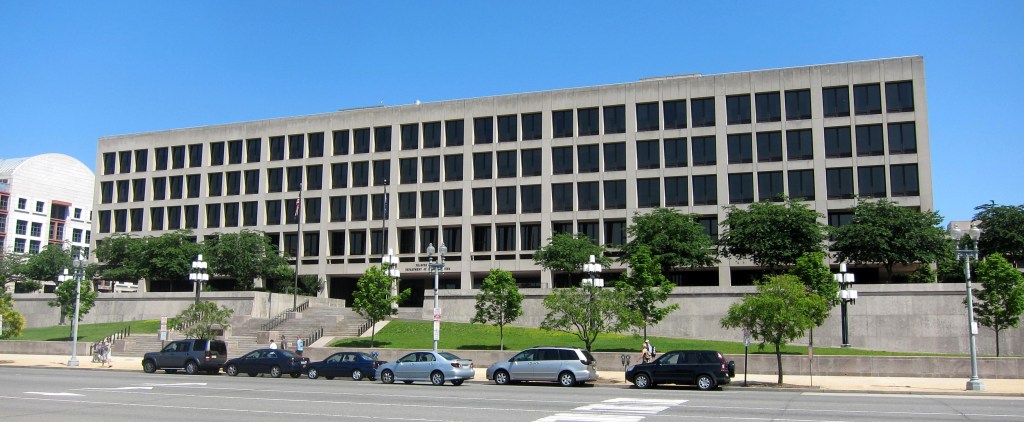
Photo: AgnosticPreachersKid, CC BY-SA 3.0 (https://creativecommons.org/licenses/by-sa/3.0), via Wikimedia Commons (source)
U.S. employers added 29,000 nonfarm payroll jobs in September and the unemployment rate stood at 4.2 percent, both little changed from August, according to the Employment Situation release published Friday, Oct. 2, by the Bureau of Labor Statistics.
September's payroll increase trailed the 45,000 average monthly gain over the prior year, BLS said. Hiring across major industries was little changed. CoinDesk and Benzinga matched the bureau's headline numbers.
Labor market details
Unemployment totaled 7.1 million people in September, little changed, BLS said. Since March the jobless rate has stayed between 4.1 percent and 4.3 percent. The Black unemployment rate rose to 7.0 percent. Other major groups showed little change: adult men at 3.9 percent, adult women at 3.6 percent, teenagers at 14.5 percent, White workers at 3.6 percent, Asian workers at 2.9 percent and Hispanic workers at 4.7 percent.
The share of adults in the labor force was 61.8 percent; the share employed was 59.2 percent. Both measures were little changed. People out of work for 27 weeks or longer numbered 1.9 million, equal to 27.1 percent of the unemployed. The number of people working part time for economic reasons was little changed at 4.5 million.
Health care added 17,000 jobs, slower than its prior-year monthly average of 33,000, BLS said. Gains continued in ambulatory care (+13,000) and hospitals (+12,000), while nursing and residential care lost 9,000 jobs. Construction rose 11,000, led by nonresidential specialty trade contractors (+12,000). Factory employment rose 9,000 and stands 72,000 above a recent low in December 2025, with increases in plastics and rubber products and in machinery.
Financial activities employment was little changed (−7,000) and is down 129,000 since a May 2025 peak, mostly in insurance, BLS said. Other major sectors — including retail, transportation and warehousing, leisure and hospitality, and government — also showed little change.
Average hourly earnings for private workers rose 5 cents, or 0.1 percent, to $37.81 and were up 3.0 percent over 12 months. Production and nonsupervisory workers earned $32.60 an hour on average, up 7 cents. The private average workweek held at 34.4 hours; manufacturing hours held at 40.6 with overtime at 3.0 hours.
Revisions
July payrolls were revised down 31,000, from a gain of 21,000 to a loss of 10,000. August was revised down 29,000, from 162,000 to 133,000. Together, July and August employment is 60,000 lower than earlier estimates, BLS said.
Benzinga wrote that the 29,000 gain missed a 90,000 economist consensus it cited and that wage growth also trailed forecasts it listed. Those consensus figures come from Benzinga, not from BLS.
What's next
BLS said the October 2026 Employment Situation is due Friday, Nov. 6, at 8:30 a.m. Eastern Time. CoinDesk noted traders were watching the report for clues on the near-term path of Federal Reserve policy after futures pricing shifted around the release.
Sources
- U.S. Bureau of Labor Statistics: The Employment Situation — September 2026 (2026-10-02)
- CoinDesk: U.S. added just 29,000 jobs in September, with unemployment rate rising to 4.2% (2026-10-02)
- Benzinga: September Jobs Report Misses: US Economy Adds 29,000 Jobs (2026-10-02)
Motion Media News corrects errors promptly. To report one, email hello@motionnews.studio.