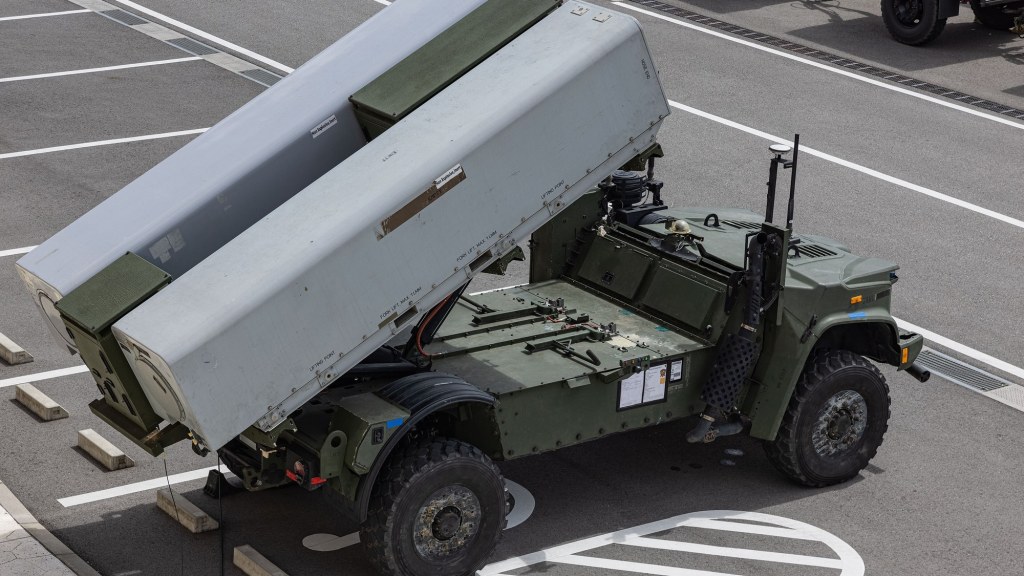
Photo: U.S. Marine Corps photo by Cpl. Evelyn Doherty (Public domain), via Wikimedia Commons (source)
The U.S. Marine Corps will send its ground-based NMESIS anti-ship missile system and its MADIS air-defense system to Yonaguni, the Japanese island closest to Taiwan, for the Keen Sword exercise later this month, Defense News reported Monday. It will be the first time either system has deployed to the island, which lies about 110 kilometers from Taiwan.
Yonaguni's town government disclosed the plan on Friday, Oct. 2, a day after Japan's Okinawa Defense Bureau passed it along, according to Defense News. The Japan Times reported the NMESIS move the same day, citing a person familiar with the matter and an exercise outline posted on the island's website.
The systems
NMESIS, the Navy-Marine Expeditionary Ship Interdiction System, puts Naval Strike Missiles on a remotely operated, unmanned launcher vehicle, Interesting Engineering reported. Its strike range of roughly 115 miles means it could reach ships in the waters around Taiwan, according to Defense News and The Japan Times. MADIS, the Marine Air Defense Integrated System, is built to guard against drones, helicopters and low-flying aircraft, Interesting Engineering said.
The 12th Marine Littoral Regiment, based on Okinawa, received both systems in June, Defense News reported. Marines previously took NMESIS to the Philippines' Batanes Islands for the Balikatan drills and to Ishigaki, also in Okinawa Prefecture, for last year's Resolute Dragon exercise.
The exercise
Keen Sword, held every two years, is the largest joint U.S.-Japan drill. This year it runs Oct. 19 to 29 and will bring together 45,000 Japan Self-Defense Forces personnel and forces from nine nations, among them Australian and French army units, Defense News reported, citing Japan's Ministry of Defense. Interesting Engineering said the exercise will also set up a joint U.S.-Japan coordination center at the Yonaguni garrison.
The U.S. Army plans to move HIMARS rocket launchers to Camp Ishigaki, about 80 miles from Yonaguni, and its Typhon missile launcher to Okinawa in mid-October, though officials have not said whether Typhon will take part, according to Defense News. Japan's Ground Self-Defense Force will train with its new Type-25 surface-to-ship missile, which Defense News said has a reach of 1,000 kilometers.
The aircraft carrier USS George Washington, which has joined past iterations, was redeployed to the Arabian Sea in August, Defense News reported. The Japan Times said Middle East deployments tied to the war with Iran have thinned U.S. hardware in the region.
Reactions
Chinese military experts have criticized the planned deployment, Defense News reported. Last year a Chinese foreign ministry spokeswoman said Japan's plan to base surface-to-air missiles on Yonaguni permanently from 2030 would "create regional tension and provoke military confrontation," according to The Japan Times.
On the island itself, opposition led the Defense Ministry to scale back the drill, local officials told Defense News. Mayor Tsuneo Uechi told the Mainichi Shimbun on Oct. 2 that V-22 Ospreys will not take part this year, and the town remains opposed to the exercises while it continues talks with the ministry, Defense News said.
What's next
Keen Sword begins Oct. 19. Large equipment will come in by sea via Kubura Port, and the town has asked residents to avoid the roads while it is moved, Defense News reported.
Sources
- Defense News: US Marine Corps anti-ship weaponry to see exercise action on remote Japan island near Taiwan (2026-10-05)
- The Japan Times: U.S. to put missile system on island near Taiwan for drills (2026-10-02)
- Interesting Engineering: US moves anti-ship missiles closer to Taiwan in major Japan drills (2026-10-03)
Motion Media News corrects errors promptly. To report one, email hello@motionnews.studio.







.jpg)