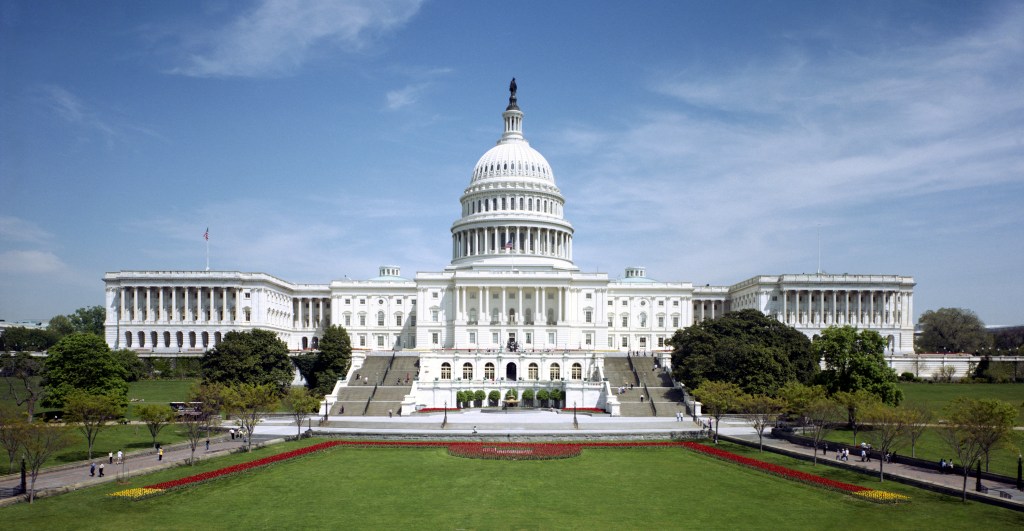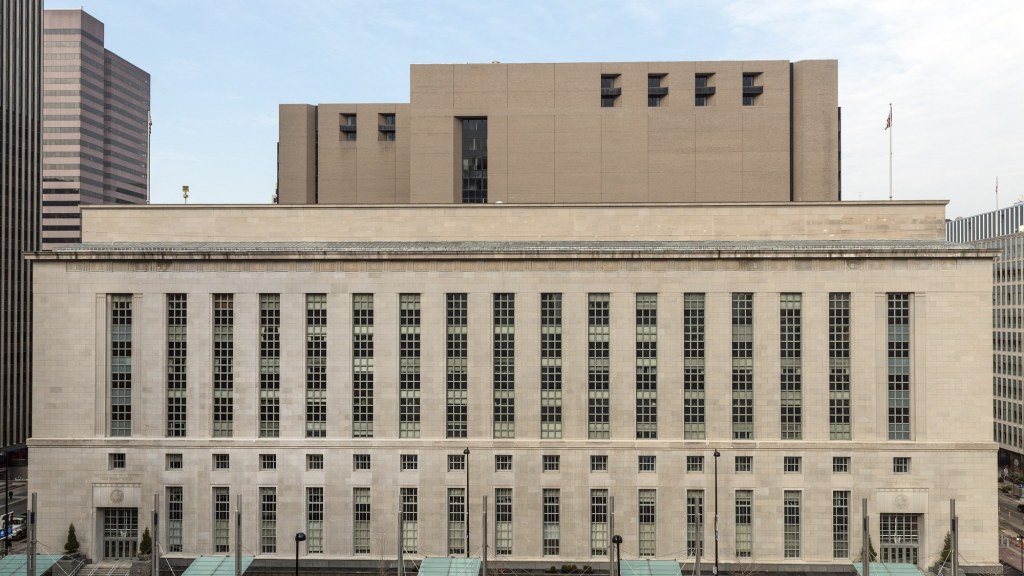
Photo: Carol M. Highsmith (Public domain), via Wikimedia Commons (source)
Kalshi's sports event contracts are subject to state gambling laws in Ohio and Tennessee, a federal appeals court decided Friday, Sept. 25, dealing the prediction market a loss in its bid to operate those markets under federal oversight alone.
The three judges on the Sixth Circuit panel agreed unanimously that Kalshi had not shown its sports contracts qualify as "swaps," a category the Commodity Futures Trading Commission alone oversees when traded on exchanges like Kalshi. Even if they were swaps, the panel said, the Commodity Exchange Act does not preempt either state's gambling laws, according to the opinion written by Judge Julia Smith Gibbons.
The court affirmed an Ohio federal judge's denial of a preliminary injunction and vacated an injunction a Tennessee federal judge had granted Kalshi, sending that case back to the district court, The Block reported.
The court's reasoning
The dispute turned on a Dodd-Frank definition that covers contracts tied to events "associated with a potential financial, economic, or commercial consequence." The panel read that to mean events with an inherent financial effect, such as an interest rate move, and said a game's knock-on effects for sponsors and local businesses are too indirect to count, according to The Block. In prior cases, the judges wrote, Kalshi itself described its sports contracts as having "no inherent economic significance."
The judges also warned that Kalshi's reading would attach criminal penalties to "a breathtaking amount of commonplace [gambling] activity," quoting a brief from former CFTC Chair Gary Gensler that cited wagers placed "between two friends at a bar."
A split among circuits
The ruling follows a similar decision by the Ninth Circuit last month and conflicts with an April Third Circuit ruling that let Kalshi keep operating in New Jersey, The Hill reported. New Jersey asked the Supreme Court earlier this month to decide how prediction markets should be regulated. Twenty states are in active litigation over the question, and 44 states wrote to the CFTC in July arguing it lacks authority over sports event contracts, according to The Hill. President Trump has backed exclusive CFTC authority over the platforms, The Hill said.
A Kalshi spokesperson told The Hill the company disagrees with the decision and does not believe "it will survive further review," adding that a "state-by-state patchwork doesn't work."
What's next
Kalshi can seek rehearing or Supreme Court review. The Tennessee case returns to the district court.
Sources
- U.S. Court of Appeals for the Sixth Circuit: KalshiEX LLC v. Schuler; KalshiEX LLC v. Orgel, Nos. 26-3196/5235 (opinion) (2026-09-25)
- The Hill: Appeals court rules against Kalshi, says prediction markets can be regulated like gambling (2026-09-25)
- The Block: Kalshi loses appeal over Ohio and Tennessee sports betting laws, widening circuit split (2026-09-26)
Motion Media News corrects errors promptly. To report one, email hello@motionnews.studio.
Added to the Motion Media archive on Sep. 28, 2026.