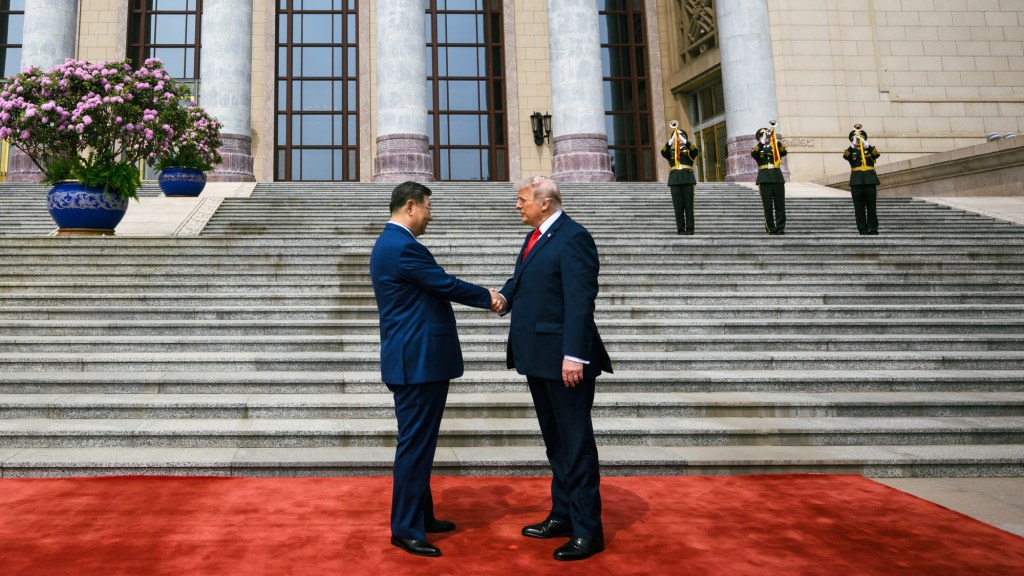
Photo: The White House (Public domain), via Wikimedia Commons (source)
The United States and China have approved two lists of goods, worth roughly $30 billion on each side, that could get lower tariffs under a new government-to-government trade board, according to documents released by the White House on Sunday.
The lists are the first concrete output of the U.S.-China Board of Trade, which President Donald Trump and Chinese President Xi Jinping created during Trump's May visit to Beijing, U.S. Trade Representative Jamieson Greer said in a statement Sunday evening. The step follows Xi's visit to Washington.
The tariff cuts are not in effect yet. Under the terms of reference for what the two governments call the "30-for-30" framework, future reductions on the listed products "will be determined and implemented in accordance with each side's domestic legal processes." The dollar values were set using 2024 bilateral trade data, the document says.
What the lists cover
The U.S. list of Chinese imports has 77 tariff lines, almost all consumer and household products. They include toys and games, plastic tableware, bed and table linens, microwave ovens, toasters and coffee makers, children's walkers and bouncers, Christmas ornaments, sports balls and fishing tackle.
The Chinese list of U.S. imports, published in Chinese, has 1,619 tariff lines. About three-quarters fall in the farm and food chapters of the tariff schedule, including beef, pork, wheat, corn, seafood, fruit and wine. It also includes logs and other wood products, cosmetics, and medical equipment such as ultrasound and MRI systems.
Greer said the arrangement would improve market access "for about 30 percent of U.S. exports to China," while letting in household goods, toys and other items "that the United States generally does not import from other countries." He said the administration would keep pressing for "compliance with commitments on agricultural and energy purchases."
When the White House first outlined the $30 billion package after the summit, it also said China would purchase American coal, 10 million metric tons a year in both 2027 and 2028, Axios reported. According to Axios, the White House fact sheet was less specific on rare earth minerals, saying the two countries "continue to work on U.S. concerns" about supply chain shortages.
What's next
The board is overseen by Treasury Secretary Scott Bessent and Greer for the United States and Vice Premier He Lifeng for China, according to its working procedures. Their deputies are to meet at least once a quarter and will track trade in the listed products.
The deputies may propose adding products to the lists, but the two sides "do not envision making adjustments more frequently than on an annual basis," the terms of reference say. The procedures also allow for working groups under the board, including one on agriculture.
Sources
- Office of the U.S. Trade Representative: Ambassador Greer Issues a Statement on Announcement of Recommendations from the U.S.-China Board of Trade (2026-09-27)
- The White House: U.S.-China Board of Trade (2026-09-27)
- The White House: Terms of Reference for the "30-for-30" Framework (PDF) (2026-09-27)
- The White House: Working Procedures for the U.S.-China Board of Trade (PDF) (2026-09-27)
- The White House: U.S. Import List (PDF) (2026-09-27)
- The White House: China Import List, in Chinese (PDF) (2026-09-27)
- Axios: U.S., China reach $30 billion tariff deal after Trump-Xi summit (2026-09-26)
Motion Media News corrects errors promptly. To report one, email hello@motionnews.studio.
Added to the Motion Media archive on Sep. 28, 2026.





-20260514.jpg)